
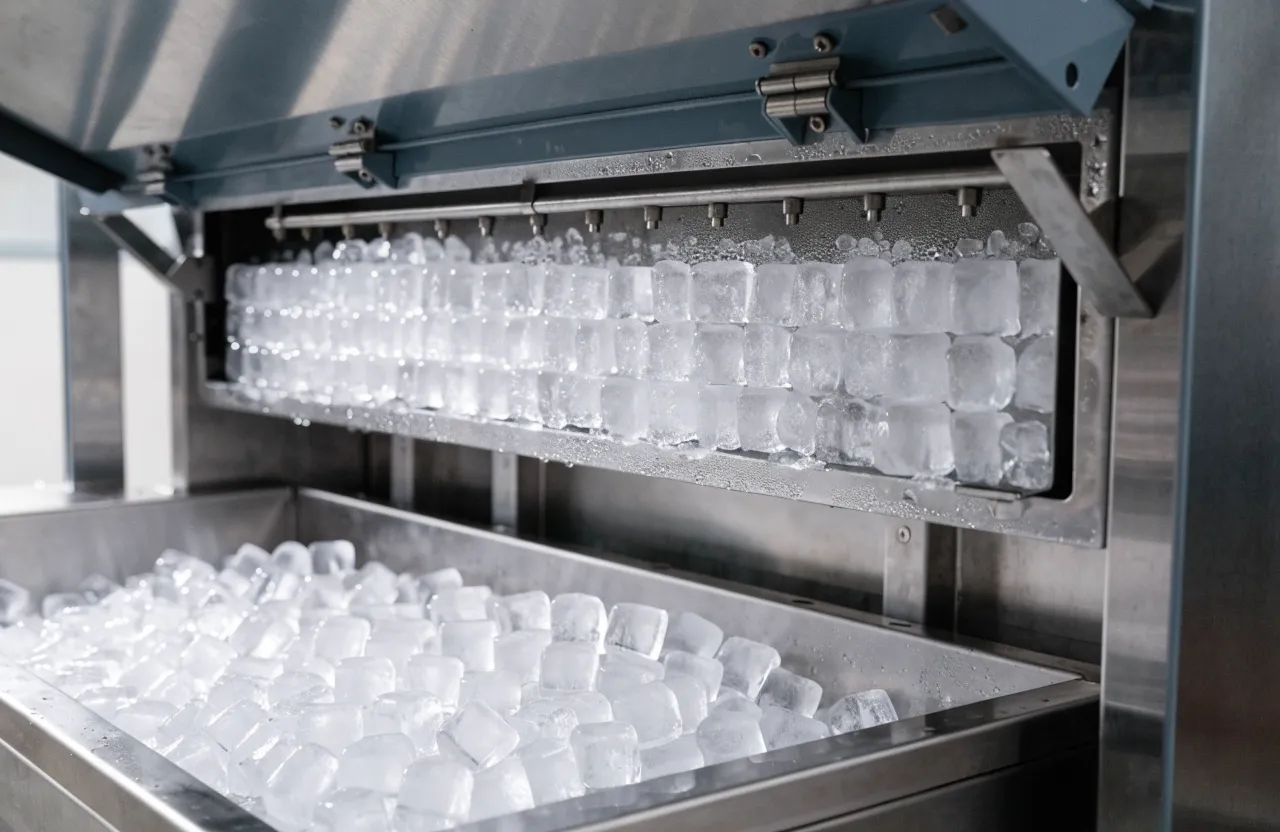
Maintenance that leaves a record
Scheduled visits on your refrigeration and HVAC, with the readings written down, so a failing part turns up on a log sheet first.
What a visit covers
One technician, both sides of the building, and a sheet of readings at the end of it.
Refrigeration rarely dies suddenly. It drifts: a condenser coil loads up with grease, a drain blocks, a door stops sealing, and the compressor runs longer every week to hold the same temperature. On a plan, that drift is something we read off a gauge in March. Without one, you meet it as warm stock on a long weekend.
Records you can put in front of an inspector
Two regulations want this written down anyway. A plan is the tidy way to have it.
- 01 Temperatures, written down Every unit on the plan gets read and logged. The Food Premises Regulation asks for food held at 4 °C or colder and a thermometer accurate within 1 °C on each unit, and a log is how you show that on a day nobody is in the building.
- 02 Refrigerant, accounted for Refrigerant added or recovered goes on the record, and a copy of it stays with you. Under B.C. Reg. 387/99 release is prohibited, a recovery device is required, and only an approved person may service this equipment (sections 4, 7 and 13). Approved person is its own status under that regulation, separate from a trade ticket, and it is a fair thing to ask any contractor about before they open a system.
- 03 A history you can read Over a year the log tells you which case is drifting, which compressor is drawing more than it did in March, and which door has been quietly costing you since spring. That is the part you cannot buy after the fact.
What a missed service looks like
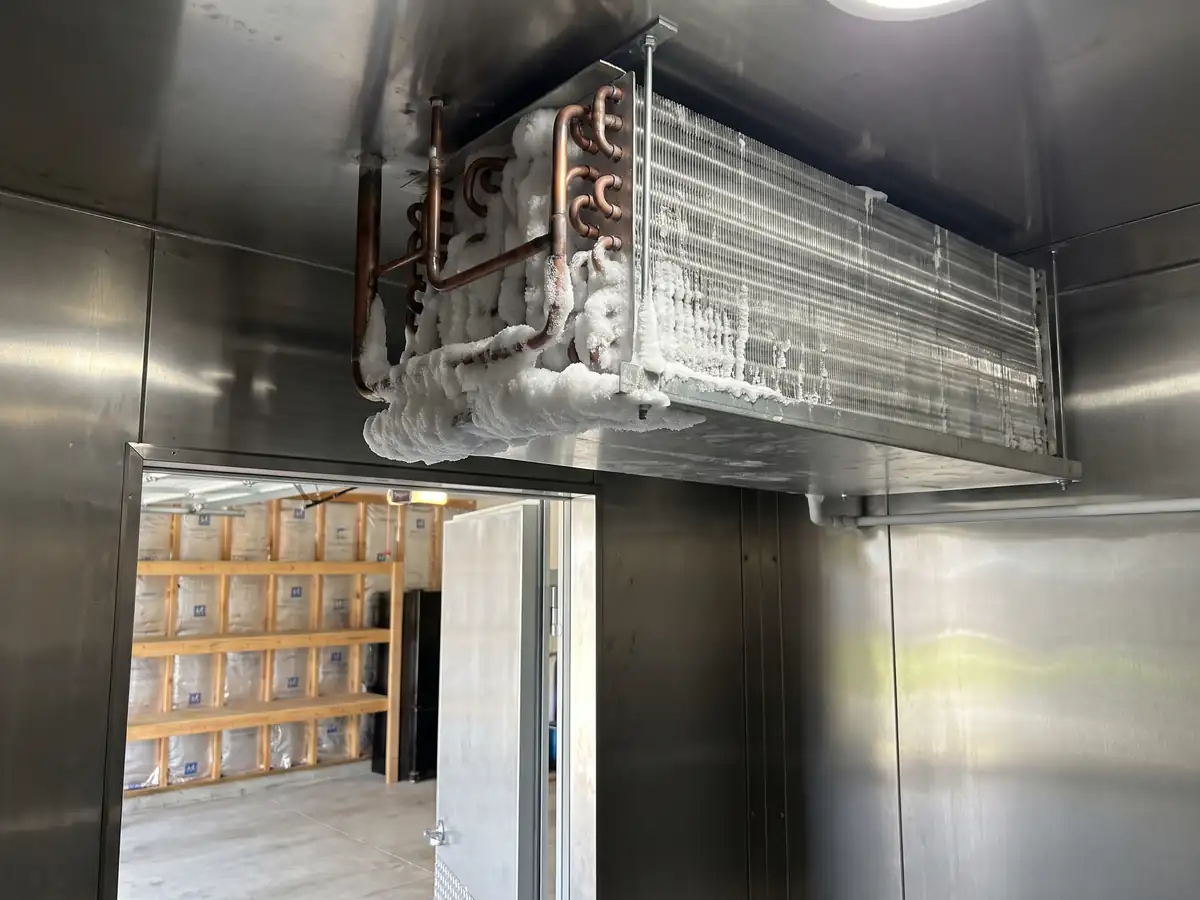
An iced-up evaporator is not the fault. It is the receipt for something else: a drain that stopped running, a defrost cycle that quit, a door that has not sealed since spring. By the time there is ice hanging off the coil, the compressor has been working overtime for weeks and your power bill has been paying for it.
No plan makes equipment immortal. What it does is move the discovery from a Saturday night to a Tuesday morning, and it keeps a lot of failures in the category of part rather than replacement.
Buildings we keep on a schedule
Planned work across the Oceanside communities, Nanaimo, the Alberni Valley and the West Coast towns beyond them.
Parksville
Restaurants, grocery, hotel and office buildings on a standing schedule.
DetailsQualicum Beach
The shop is here, so plan visits are a short run: village kitchens, stores and strata buildings.
DetailsNanaimo
Down Highway 19 from the shop. Refrigeration for kitchens, grocery and walk-ins.
DetailsPort Alberni
The Valley gets a real summer, a July design temperature of 31 degrees, and that is the week a clogged condenser stops keeping up. Plan visits here are mostly condensers, drains and door seals, done before the heat arrives.
DetailsTofino
Salt air and more than forty days a year of heavy rain are hard on anything mounted outside. A plan visit out there spends most of its time on the outdoor half of the system, while the wear is still something we can clean off.
DetailsUcluelet
One visit covers the lot out here: coolers, ice machine and cases together, with the readings written down so the next visit has something to compare against.
DetailsOutside those towns, for scheduled commercial work, ask and we will tell you straight whether we can cover it.
Questions about maintenance plans
How often should commercial refrigeration be serviced?
Can you take over our existing maintenance schedule?
Does a plan cover HVAC as well as refrigeration?
What do we get after a visit?
What if something fails between visits?
Taking over from another contractor
Changing who services your equipment is mostly paperwork and knowing where things are.
If part of your kit was installed by somebody else, that is normal and it is not a problem. Put the model and serial numbers off the data plate in the contact form, and you will hear what we see before you commit to anything. Home systems are on their own page.
Put your equipment on a schedule
Tell us what you run and where it lives. We reply within 24 hours. We would rather look at the equipment than price a plan off a list.