
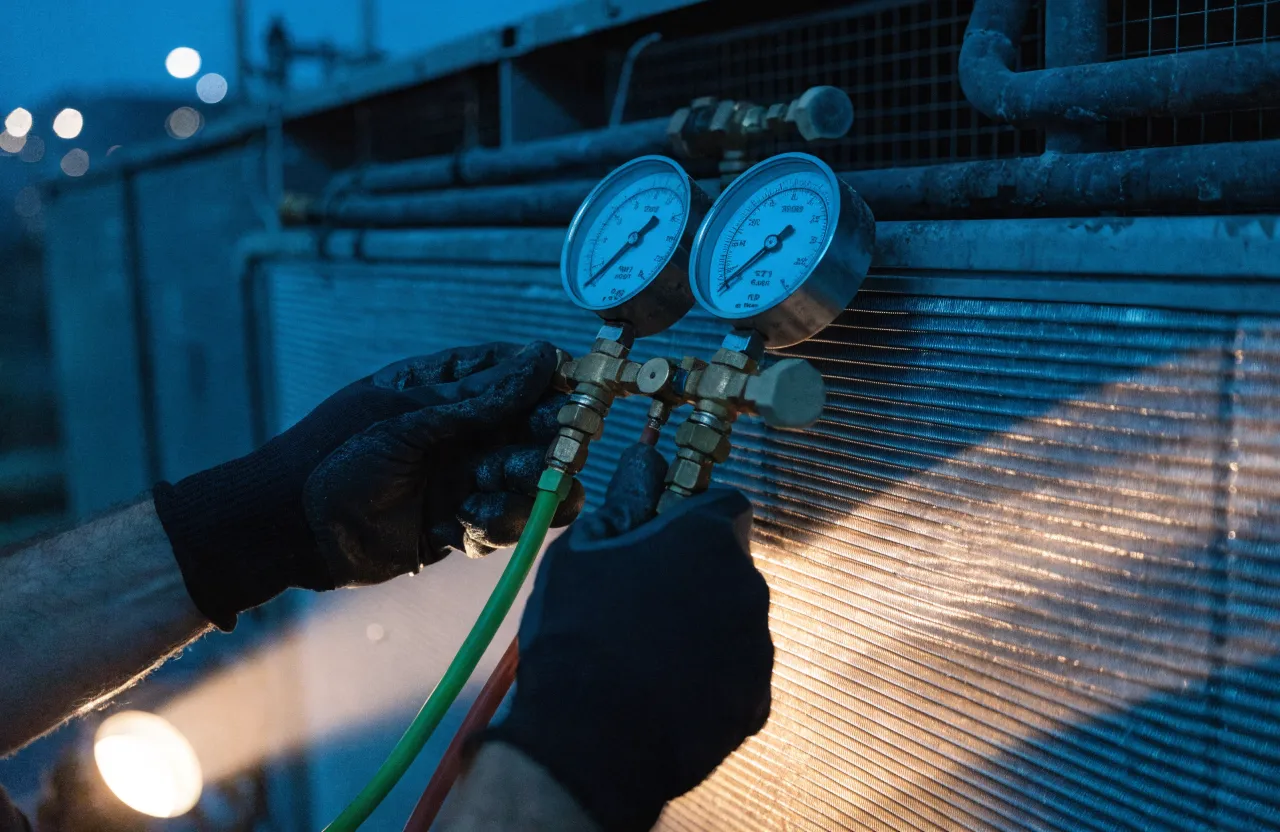
New refrigeration, sized for the room
Walk-ins, cold rooms, condensing units and display cases for Oceanside kitchens, stores and shops, from the site visit to start-up.
What we put in
New equipment, replacements for equipment that has had enough, and the boring parts that decide whether either one lasts.
An install is three decisions and a lot of pipework. What the room has to hold, what the refrigerant is going to be, and where the heat goes. Get those right and the system runs quietly in the background for years. Get them wrong and you meet your refrigeration contractor far more often than you wanted to.
We quote from the space rather than from a model number, and we would rather tell you that the unit you were sold is oversized than fit it and take the money.
How a new system goes in
Four steps, and the two in the middle are the ones a cheap quote leaves out.
- 01 We look at the space Door traffic, what goes in and out, drains, power, and where a condensing unit can sit without cooking itself or running hot against a neighbour's wall.
- 02 We size it for the load Not a catalogue average. A cold room opened forty times a service is a different machine from one opened twice, and the difference shows up in your power bill for the next fifteen years.
- 03 Design registration and permit A refrigeration system needs an installation permit before regulated work starts, and regulated work cannot be performed until the design has been registered by a provincial safety manager (B.C. Reg. 104/2004, sections 62 and 82). That requirement sits on the job rather than on a brand, so ask who is taking the permit out and who is registering the design before anything is signed.
- 04 Start-up, then the readings Superheat, subcool, defrost timing and controls set and written down at hand-over, so your record starts on day one instead of on the first breakdown.
Where we install new systems
Oceanside, Nanaimo, the Alberni Valley and the West Coast, all of it worked from the shop in Qualicum Beach.
Parksville
Grocery, restaurant and hotel work, and the site visit that comes before any number.
DetailsQualicum Beach
The shop is here. New cold rooms, replacement condensing units and display work for village businesses.
DetailsNanaimo
Down Highway 19 from the shop. Refrigeration for kitchens, grocery and walk-ins.
DetailsPort Alberni
New and replacement systems for Valley stores and kitchens, 43.5 kilometres up Highway 4. The site gets measured before a number goes on paper, the same as a job in town.
DetailsTofino
A new system on the outer coast is specified for where it will stand. Coastal protection on the outdoor unit is a manufacturer requirement near salt water, and it belongs in the quote rather than in a warranty argument later.
DetailsUcluelet
Cold rooms, cases and condensing units for the harbour businesses. Everything arrives on Highway 4, so delivery, rigging and the power supply are settled before the crew leaves the shop.
DetailsOutside those towns, for scheduled commercial work, ask and we will tell you straight whether we can cover it.
The refrigerant is part of the decision
New commercial equipment is capped on the refrigerant it may contain, and that cap follows the system for the whole of its service life.
Self-contained units designed to hold 0 °C and above. Cap on new commercial equipment since January 1, 2020.
Self-contained units below 0 °C, down to −50 °C. Same date, same regulation.
Centralized systems and remote condensing units holding −50 °C and above. Same date.
Chillers have been capped at 750 since January 1, 2025. The figures are global warming potential limits on the refrigerant a new product may contain, from Canada's halocarbon regulations (SOR/2016-137, Schedule 1.1). What it means in a kitchen or a back room: the gas in your new system is not the gas in the old one, the parts and the leak rules differ, and the refrigerant belongs in the quote conversation rather than in the hand-over envelope.
Permits are part of the job
Refrigeration is regulated work in British Columbia, and regulated work leaves a paper trail.
Installing, repairing or altering a refrigeration system takes an installation permit, work under that permit has to be done by a licensed contractor, and regulated work on the equipment cannot be performed until the design has been registered by a provincial safety manager under the Safety Standards Act. Maintenance, overhauls and approved like-for-like parts are the stated exception. That is the Power Engineers, Boiler, Pressure Vessel and Refrigeration Safety Regulation, B.C. Reg. 104/2004, sections 62, 82, 57 and 63.
It matters most on the day nobody is thinking about it. When a system fails inside its first year, or an insurer asks who installed the rack above your stock, the permit and the registration are the answer. That is the rule as it stands, and it applies to everyone quoting the work. Ask us which licence class your job goes under and who is registering the design, and ask the same of anyone else you are talking to.
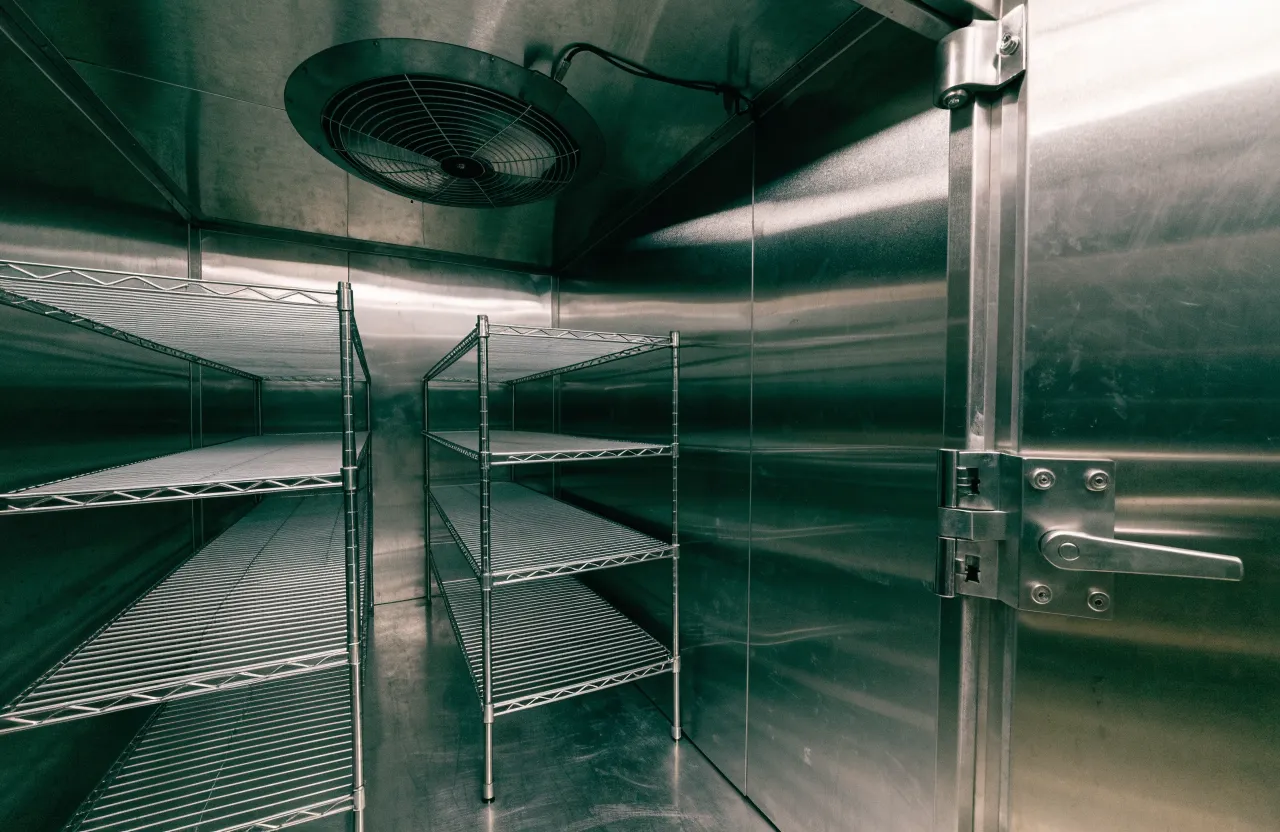
Replacing a system that still runs
Most installs are not a new build. The old unit is still going, badly, and what is inside it cannot wait two days for a changeover.
So the plan gets built backwards from the product. What moves into a temporary unit, what goes into the walk-in next door, what stays on the old system until the last hour of the job. Tell us what is in the boxes and we will tell you what the day looks like before you commit to it.
If it is the walk-in itself that is failing, start on the walk-in page. If it quit last night, the refrigeration line is answered around the clock.
Incentives, and the order they happen in
One live commercial program reaches a refrigeration project this size on the Island. It has to be started before the work is.
Bring it up at the quote stage. Pre-approval has to happen before the work starts, and a system chosen without the program in mind can miss it by a model number. The same program covers the air side of the building, so if the project takes in a rooftop unit as well, start on the commercial HVAC page. CleanBC's Custom, Custom-Lite and Commercial Express programs were all showing as paused on Better Buildings BC when we last read them, so anyone quoting you those is quoting from an old page.
Questions before a quote
Do I need a permit for a new walk-in or refrigeration system?
Which refrigerant will a new system use?
Can you help with BC Hydro incentives?
Can you replace a system without shutting us down for a week?
What do you need from us to quote?
Tell us about the space as well as the model
Tell us what the room has to hold and when you need it running. We reply within 24 hours.