
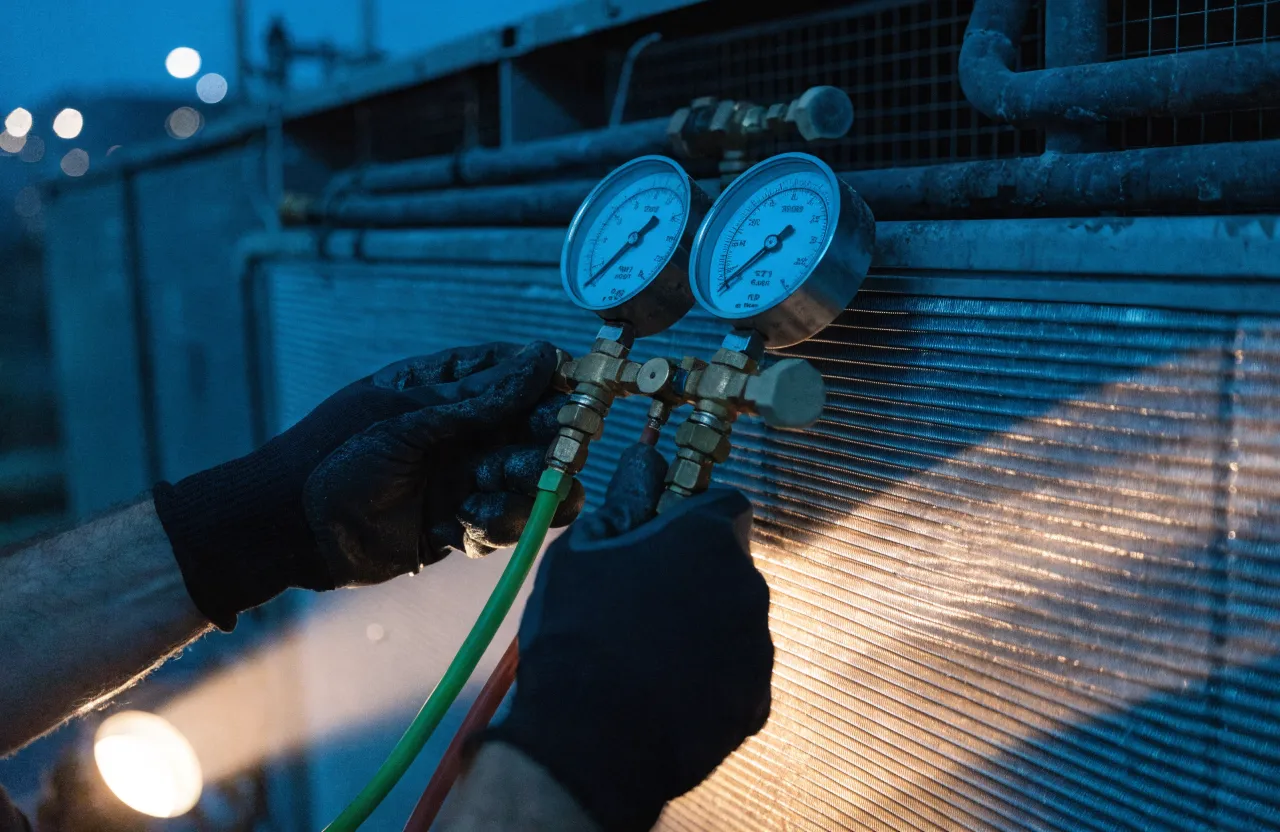
Repair or replace? What the $5,000 rule misses
A rule of thumb with nothing official behind it. Here is where it holds, and where it costs you money.
The $5,000 rule is the one people arrive with. It is a single sum, it gives you an answer in ten seconds, and for a straightforward furnace or air conditioner it points the right way often enough to be useful.
Where it helps is as a gut check. If a fifteen year old system needs an $800 repair, the rule tells you to stop and think, and it is right to. If a seven year old system needs a $400 part, the rule tells you to fix it, and it is right about that too.
Where it fails is everything in between, which is most of the calls we get. It knows two numbers about your equipment and nothing else, and the things it cannot see are the ones that decide the answer.
age in years × repair cost
Over $5,000, the rule says replace. Under $5,000, it says repair. Both worked examples come with it: a twelve year old system and a $500 repair gives $6,000, so replace. A seven year old system and a $400 repair gives $2,800, so repair.
A consumer rule of thumb, described by CBS News on June 24, 2026 as a homeowner guideline and a starting point rather than a professional evaluation. It is not a code, a program rule or an industry standard, and nobody enforces it.
Let it die and the rebate dies with it
This is the part of the decision that costs the most, and the sum has no idea it exists.
On a house heated by hard-wired electric heat, baseboards, radiant ceilings or an electric furnace, a heat pump can carry a provincial rebate. That is the case the Home Renovation Rebate was written for.
What the same program says about equipment that has already failed is blunt. Replacing an existing heat pump is not eligible. Adding a head to an existing heat pump is not eligible. Emergency replacement of a broken electric system is not eligible either.
So the household that plans the switch while the old system still limps along is in a different financial position from the one that replaces in a panic in February. Same house, same equipment, different answer.
Read off the CleanBC Better Homes program requirements. Amounts and deadlines move; the rebate pages link the official page each figure comes from.
What we look at before we say replace
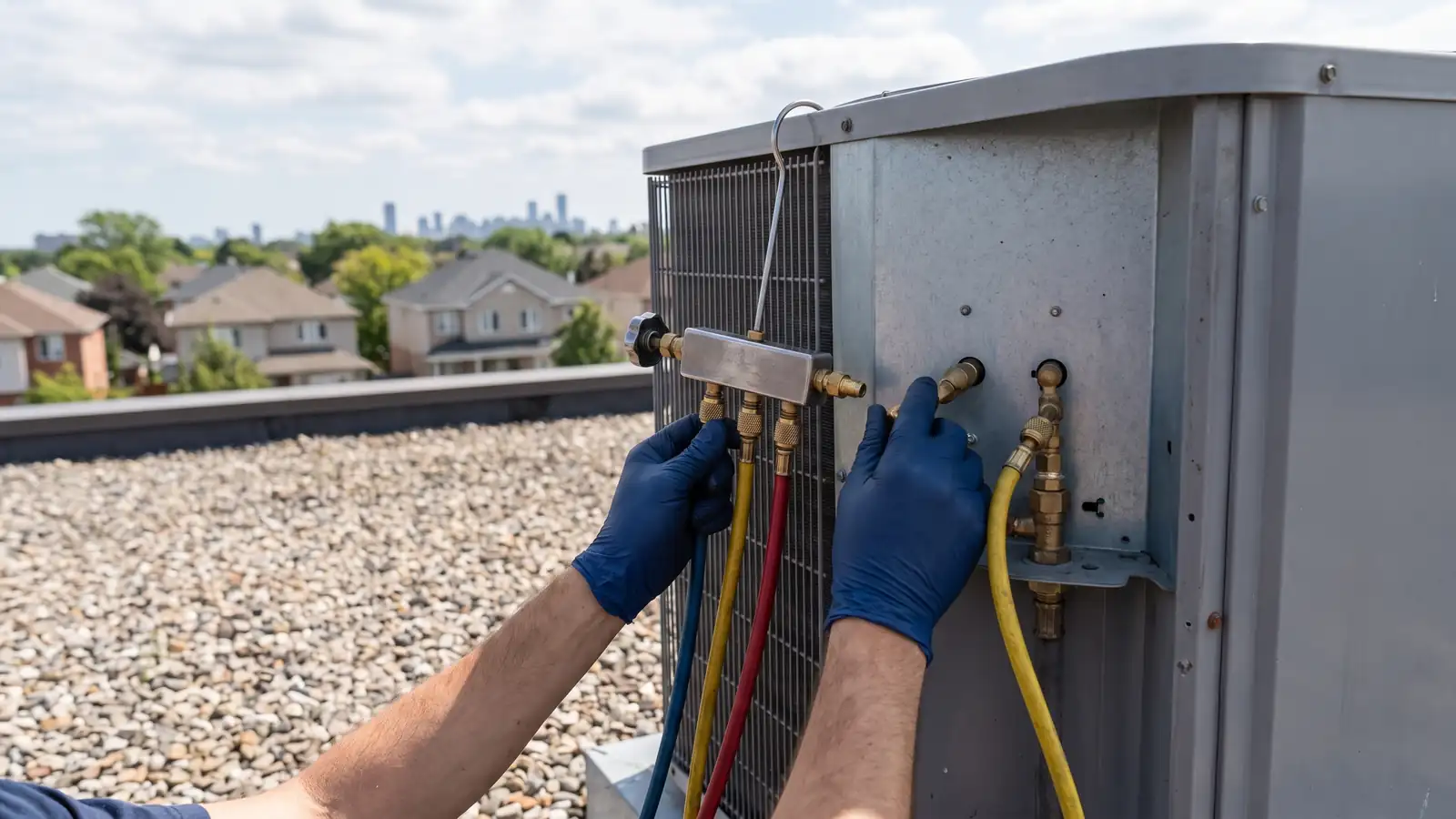
A recommendation is only worth something if you can see the reasoning behind it, so a visit works through the same ground every time.
- Whether the equipment is safe to run at all, which settles it on its own
- What actually failed, and whether it failed because of something else
- What the part costs against what the whole machine costs
- Whether the refrigerant, the controls and the parts are still available
- How the rest of the system is holding up, beyond the piece that quit
- What another failure would cost you, at home or in a business
You hear all of it before anything is ordered. Sometimes that ends with a $200 part and no further conversation.
Six more things the sum cannot see
Any one of these can flip the answer on its own, and the first one outranks all the rest.
Safety is not on the scale
A cracked heat exchanger, a gas leak or a burnt panel ends the conversation. No arithmetic outranks an appliance that has to be shut down, and a technician who finds one has to tell you.
The refrigerant in the machine
Older equipment runs gases that are being phased down. As supply tightens the price of a top-up moves, and chasing a leak stops being a sensible bet long before the compressor gives out.
What it costs to run
Two systems can both work and still cost very different amounts across a wet island winter. That gap belongs in the decision, and a rule built on age and repair cost has nowhere to put it.
Which repair it is
A capacitor and a compressor are the same line on the rule and nothing like each other in the machine. A big bill on an otherwise sound system does not automatically mean the system is finished.
What the downtime costs
For a business the repair bill is rarely the biggest figure. The product in the case, the staff standing around and the Saturday service you cannot run all cost more than the part.
What the rest of the system looks like
A new condenser bolted onto a twenty year old line set, a coil that never matched, ductwork that was never sized for the load. The rule prices the part and ignores what it is attached to.
Commercial equipment is a different sum
On a business the arithmetic runs on downtime rather than age. A walk-in that gives up on a long weekend can cost more in one night than the repair was ever going to, and the rule has no line for stock in a bin.
Condition beats the calendar too. A twenty year old condensing unit that has been serviced and kept clean can be worth holding onto. A five year old one that has never been touched, with a blocked condenser and a door that has not sealed since spring, often is not.
Where replacement is the answer, there is usually more than one way to do it: keep the box and change the refrigeration, or spread the work across a quiet month rather than an emergency Saturday.
Heat pump or furnace, and which house you have
On Vancouver Island the fuel your home runs on today decides more of this than the equipment does.
If the house runs on electric heat
Baseboards, radiant ceilings or an electric furnace. Swapping them for a heat pump is the case the provincial rebate was built for, and it has to be installed by a contractor registered for the program. Griffin Refrigeration is not registered with CleanBC Better Homes, so that rebate is not available on a heat pump we install today.
DetailsIf the house runs on gas, propane or oil
The provincial fossil fuel switch rebate does not reach the Island, and the federal grant and loan are both closed. Some Regional District of Nanaimo electoral areas run a rebate of their own, and households under the income limits have a separate provincial program with its own contractor rules.
DetailsThe federal side is settled: the Canada Greener Homes loan is closed. What a system costs before any rebate is on the heat pump cost page.
Questions people arrive with
What is the $5,000 rule for HVAC?
Does a rebate cover replacing a heat pump that has died?
How long does a heat pump last?
Is a heat pump worth it here instead of a gas furnace?
Ice machine or a display case rather than a furnace? Ice machine service and 24/7 refrigeration repair cover the commercial side.
- CleanBC Better Homes, Home Renovation Rebate program requirements
- CBS News, what is the $5,000 rule for HVAC systems, June 24, 2026
Program conditions change. Where a figure or a deadline matters, the rebate pages link the official page it came from.
Read next
How we quote a job
What we need before anyone prices the work, and what happens once a technician is on site.
ReadHeat pumps and home heating
Ducted and ductless systems sized for the house they go in, and for an island winter.
Read24/7 refrigeration repair
The line that gets answered when a cooler quits outside shop hours.
Read- 01What it is: make, model and roughly how old, off the data plate if you can get to it.
- 02What it is doing now, and the day it started doing it.
- 03The repair quote you have been given, with the part named on it.
- 04What heats the house, or what the equipment is holding, because that is what decides whether a rebate is on the table at all.
Four answers beat one sum
With those four, the arithmetic at the top of this page can be run properly, and you hear which of the things it cannot see is doing the work in your case.
Sometimes that ends the conversation: a cheap part on a system with years left in it does not need a visit to say so. Sometimes it ends with somebody coming to look, because pressures, a heat exchanger or a flooded evaporator are not things anyone can read off a description.
Send us the age and the repair quote
Tell us what it is, what it is doing and what somebody has quoted you, and we will tell you what we would do with it. We reply within 24 hours.