
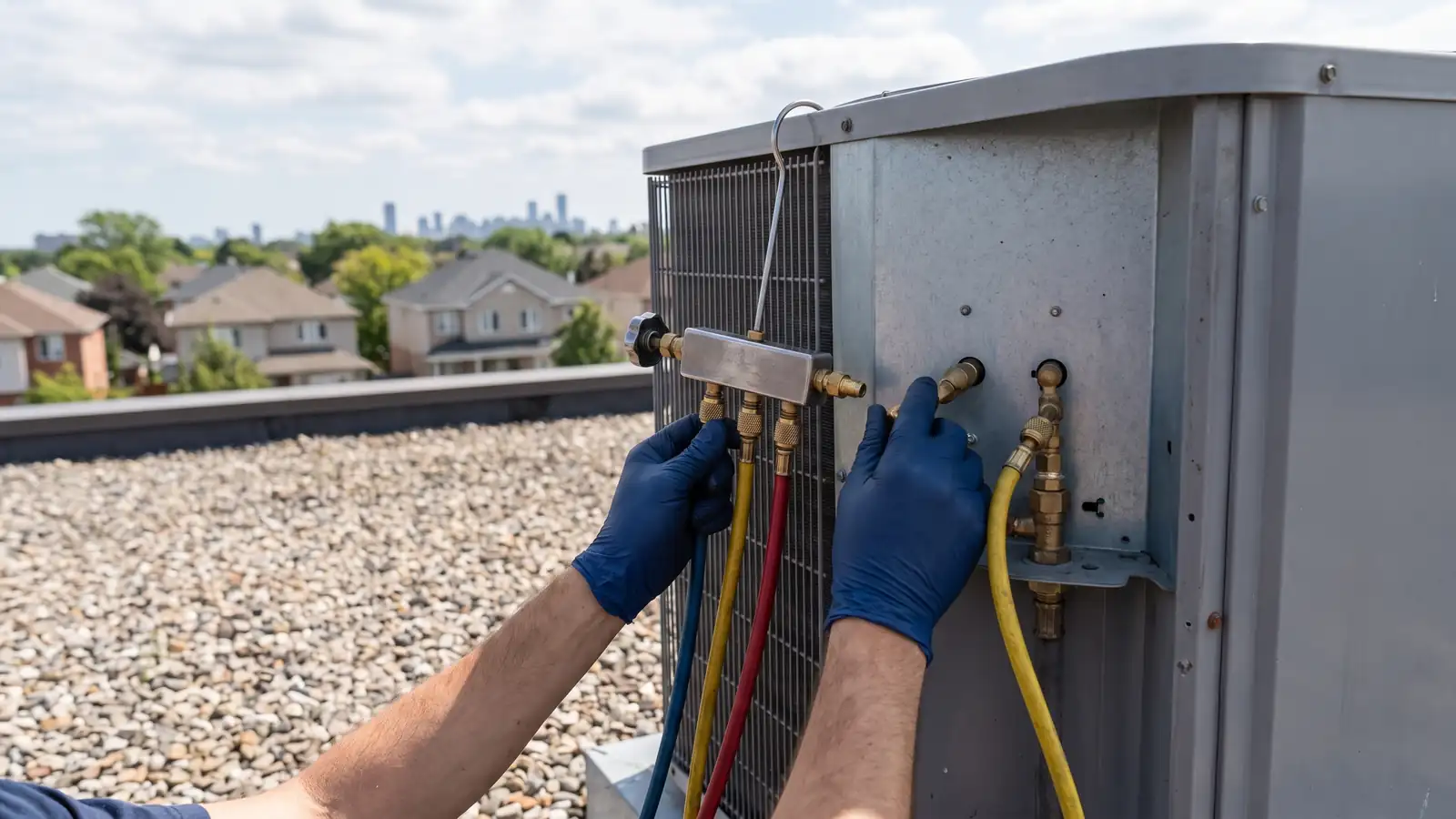
What switching refrigeration contractors involves
A walk-through, an equipment list, whatever service history you can get, and a first visit that writes down every reading.
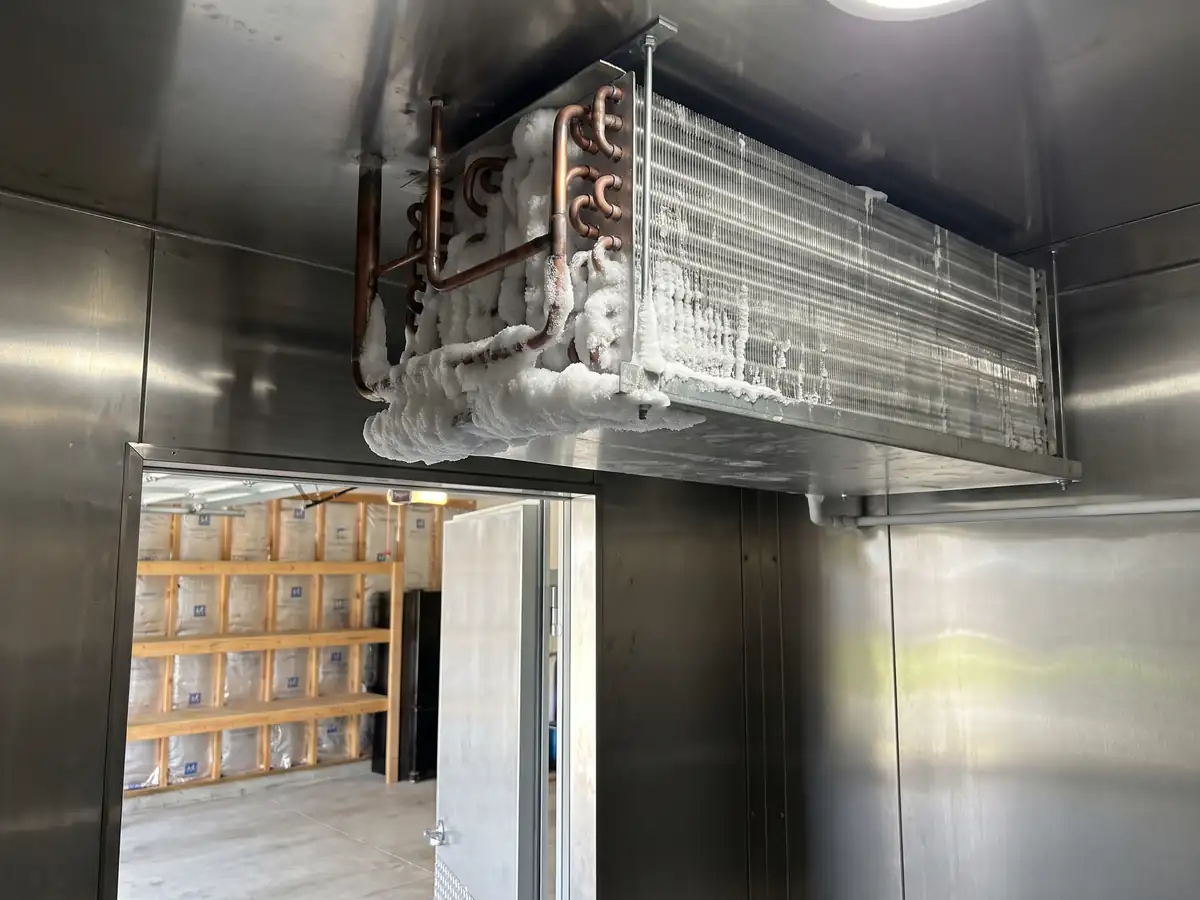
Close enough to turn up, small enough to answer
A refrigeration contract is not really about the scheduled visit. It is about nine o'clock on a Saturday, when the walk-in is sitting at eight degrees with a weekend of stock in it, and the only question that matters is who picks up.
We are based in Qualicum Beach, and the commercial refrigeration line is answered around the clock, holidays included. There is no dispatch queue in the middle of it. The number goes to the shop.
What this page will not do is tell you how fast we will be there. That depends on the night. We would rather say that on the phone than print a promise on a website.
What the rules ask of your cold holding
None of this is our opinion. It is the regulation an inspector reads from, and it is what a maintenance plan is really for.
-
Cold holding is a number
Potentially hazardous food has to sit at no more than 4 °C or no less than 60 °C, and frozen food at no more than −18 °C. A cooler drifting to 8 °C over a weekend is a failure.
Food Premises Regulation, section 14 -
The thermometer is part of the rule
Every piece of refrigeration and hot-holding equipment has to carry a thermometer accurate within 1 °C, and the equipment itself has to be of a type and capacity that can actually hold those temperatures. Undersized is not compliant.
Food Premises Regulation, section 19 -
Somebody does come and look
Island Health says its environmental health officers carry out more than 7,000 inspections of restaurants, food facilities and stores a year. The visit you cannot schedule is the one your equipment has to be ready for. Restaurant and food service work
Island Health food safety
How moving your work actually goes
Four steps, none of them dramatic. The point is that nothing gets missed in the handover.
- 01 A walk-through We come and look at the lot: walk-ins, reach-ins, display cases, prep tables, ice machines and whatever is on the roof. You hear what we found and what we would deal with first.
- 02 An equipment list Make, model, serial, refrigerant type and charge, age and location, written down once so it stops living in one manager's head.
- 03 Whatever history you can get Ask your current contractor for a copy of the refrigerant service log. It is kept at their place of business and covers the last 36 months of charges and leaks found.
- 04 A first maintenance visit Temperatures, pressures, superheat, door seals and defrost, all written down. That first set of readings is what every later visit gets compared against.

What to have ready
None of this is a gate. Send what exists, say what does not, and the walk-through fills the gaps.
- Make, model and serial from the nameplate on each unit
- The last service reports, however scrappy
- Refrigerant records: type, charge and any leaks found
- Your temperature logs and the most recent inspection report
- The one thing that has been annoying you for a year
What operators ask before moving
Do we have to wait for our current contract to end?
Will you work on equipment another company installed?
What happens if something breaks before our first visit?
Do you cover the HVAC as well as the refrigeration?
Who is allowed to touch the refrigerant in our equipment?
Worth a read either way: why a local contractor is a lifeline for your business.
Start with a walk-through
One visit, an equipment list you keep, and a straight answer about what needs doing first. Send us the site and what is in it. We reply within 24 hours.