
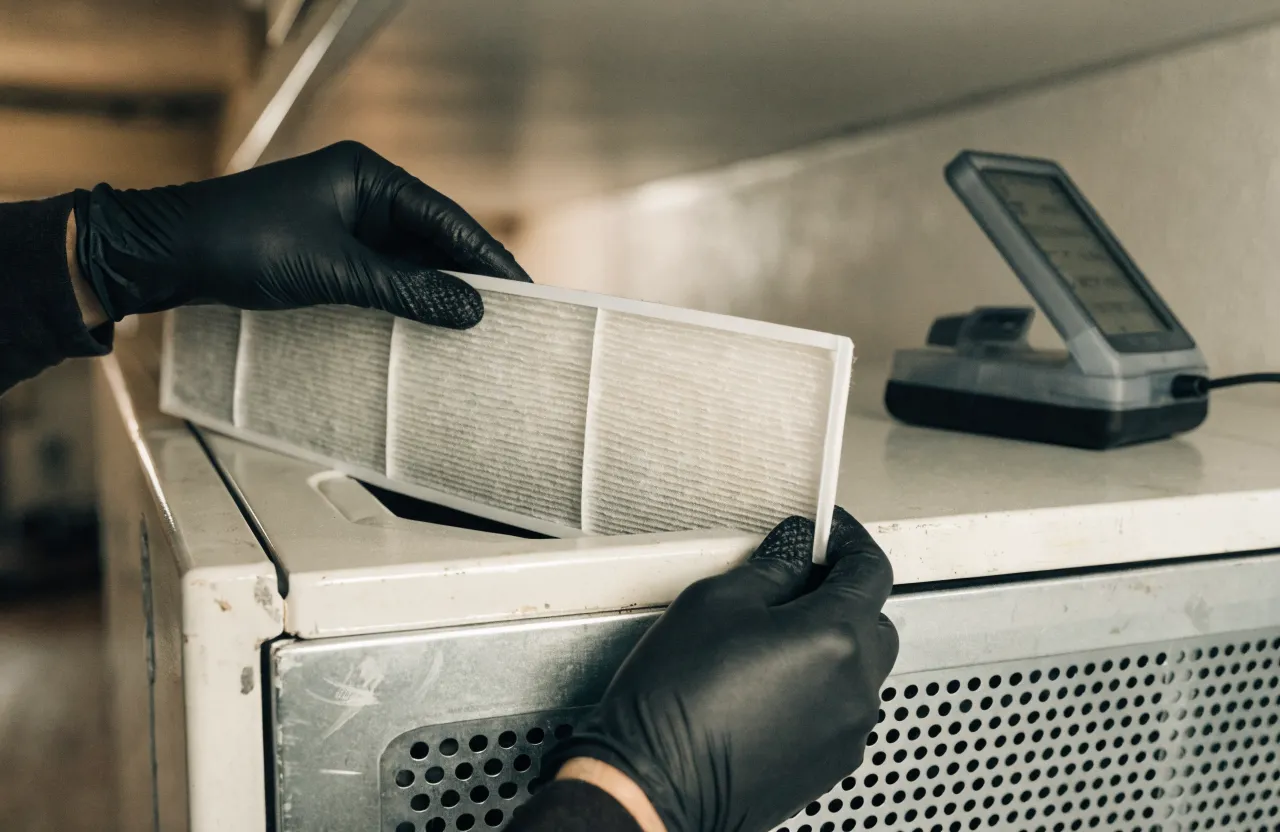
Yes, we service equipment we did not install
Give us the model and serial numbers, the install date and what it is doing, and you get a straight read on what the equipment needs.

A second owner for a first-owner install
Equipment changes hands more often than people expect. A house sells, a company reorganises, a phone number stops working. The heat pump on the wall does not care about any of that, and it does not need to.
What we will not do is tell you the last crew got it wrong. Most of the time they did not. We read what is in front of us: the airflow, the charge, the wiring, the way the system was sized for the house. Then you hear what we found, which parts of it matter this year, and which parts can wait.
If that reads slower than a same-visit replacement quote, it is. It is also the only way to say anything true about a system we have not seen before.
What to send us
Four things. Send what you have and say what you do not have; a partial set is still worth sending.
Model and serial numbers
Both are on the data plate, usually on the side of the outdoor unit and inside the indoor one. Copy them off the plate exactly as printed.
When it went in
The install date, roughly, and who did the commissioning if you know. Age changes what is worth doing and what is worth leaving.
Your last service invoice
It tells us what was found last time, what was charged into the system and what was left for next visit.
Any warranty papers
Registration confirmations, the original quote, permits. If you have none of it, say so and we work from the equipment itself.
Two things nobody tells you at handover
Both matter more than the brochure, and both are easier to sort out before something breaks.
Your service history is not in your house
Anyone who charges or recharges refrigeration or air conditioning equipment has to keep a service log, and the regulation says that log is kept at the service company's own place of business. It has to run chronologically over the previous 36 months, recording the service calls where the system was charged and any leaks found.
So the history of your equipment sits with whoever last worked on it. If you are moving your work, ask for a copy of it. It is a reasonable request, it costs nothing, and it saves the next technician from guessing at what has already been tried.
B.C. Reg. 387/99, sections 3 and 10A warranty is a document you can read
Manufacturer warranties on heat pumps and furnaces usually turn on three things: that the unit was registered after the install, that it was commissioned properly, and that it has been serviced by someone qualified to touch refrigerant. Terms differ by brand, and they differ again between the parts and the labour.
We are not going to tell you your warranty is fine, or that it is void, without reading it. Send the model numbers and what the papers say through the contact form, and you will get our read of them, in plain words, before you spend anything.
Nothing on this page is a warranty from us or from a manufacturer
The first visit sets the baseline
On equipment we have not seen before, the first maintenance visit is worth more than the ones after it. Temperatures, pressures, static, amp draw and filter condition go on paper. None of it is interesting on its own. It becomes interesting next year, when one of the numbers has moved.
That is also what makes a repair-or-replace conversation honest later. A recommendation to replace should rest on readings and on the age of the equipment.
Questions about taking it on
Will you service a heat pump you did not install?
Is my manufacturer warranty still good?
Can you take over my maintenance visits?
What if I have none of the paperwork?
Will a rebate cover replacing a heat pump that is already there?

Send it over and find out where you stand
Model numbers, install date and what it is doing, and you get a real answer instead of a guess. We reply within 24 hours.